Five-hole vintage and eight-hole modern mounts.
On a traditional Telecaster, the pickguard surrounds the neck pickup and meets a separate metal control plate. It does not carry the bridge pickup or the volume and tone controls as a Strat guard does. That smaller outline still needs precise screw placement. Vintage-style guards commonly use five body screws, while many later standard Telecasters use eight. The two extra neck-pickup height-adjustment holes found on some guards are not body-mounting holes; count those separately.
Fender’s Pure Vintage ’52–’58 replacement follows a five-hole pattern, with neck-pickup mounting beneath the guard. It is a useful reference for early-style instruments and reissues, not a promise that every vintage-looking Tele shares its dimensions. Fender’s modern eight-hole replacement lists American, American Standard, American Deluxe, American Special, Highway One, Road Worn, Standard, and Deluxe series among its applications. Its listing also includes Squier Standard models from 2004 onward. Those examples describe Fender’s replacement part; your PickGuard World order still needs its own template comparison.
The neck pickup is the important second check.
A traditional Tele neck pickup may be screwed to the body beneath the guard. Other versions suspend it from two screws through the guard, allowing height adjustment without removing the pickguard. Confirm which arrangement your guitar uses. The standard Tele option in our designer shows a single-coil neck opening. A neck humbucker, Wide Range pickup, or unusual pickup cover requires a different cutout and potentially different mounting holes; contact us rather than assuming the standard opening will work.
Thinline, Deluxe, Custom, Nashville three-pickup, and Esquire variants are not interchangeable with a standard two-pickup Tele guard. Even an eight-screw instrument can differ at the neck heel, bridge edge, or control-plate curve. For Japanese Fender, Squier series other than those specifically documented, aftermarket bodies, and modified guitars, send the exact model and year plus a straight-on photo of the existing guard. An original part or tracing can help resolve an uncommon shape before cutting.
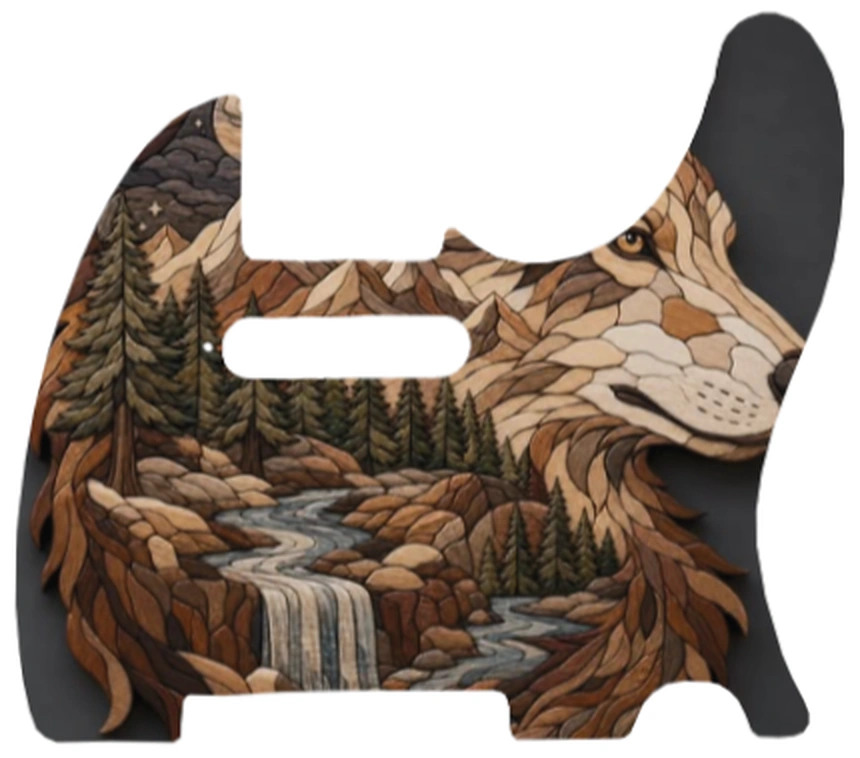
Once the fit is confirmed, try your finish or personal artwork on the Tele outline and adjust its placement around the neck opening. Capture the arrangement before adding the build to your cart so the workshop can see the composition you chose. If a screw hole or edge looks off during installation, stop and contact us instead of forcing the guard or drilling the guitar.