Before You Order That Strat Pickguard, Check One Thing
Before ordering a Stratocaster pickguard, compare the screw-hole pattern on your guitar. This quick check can prevent the most common replacement-fit problem.
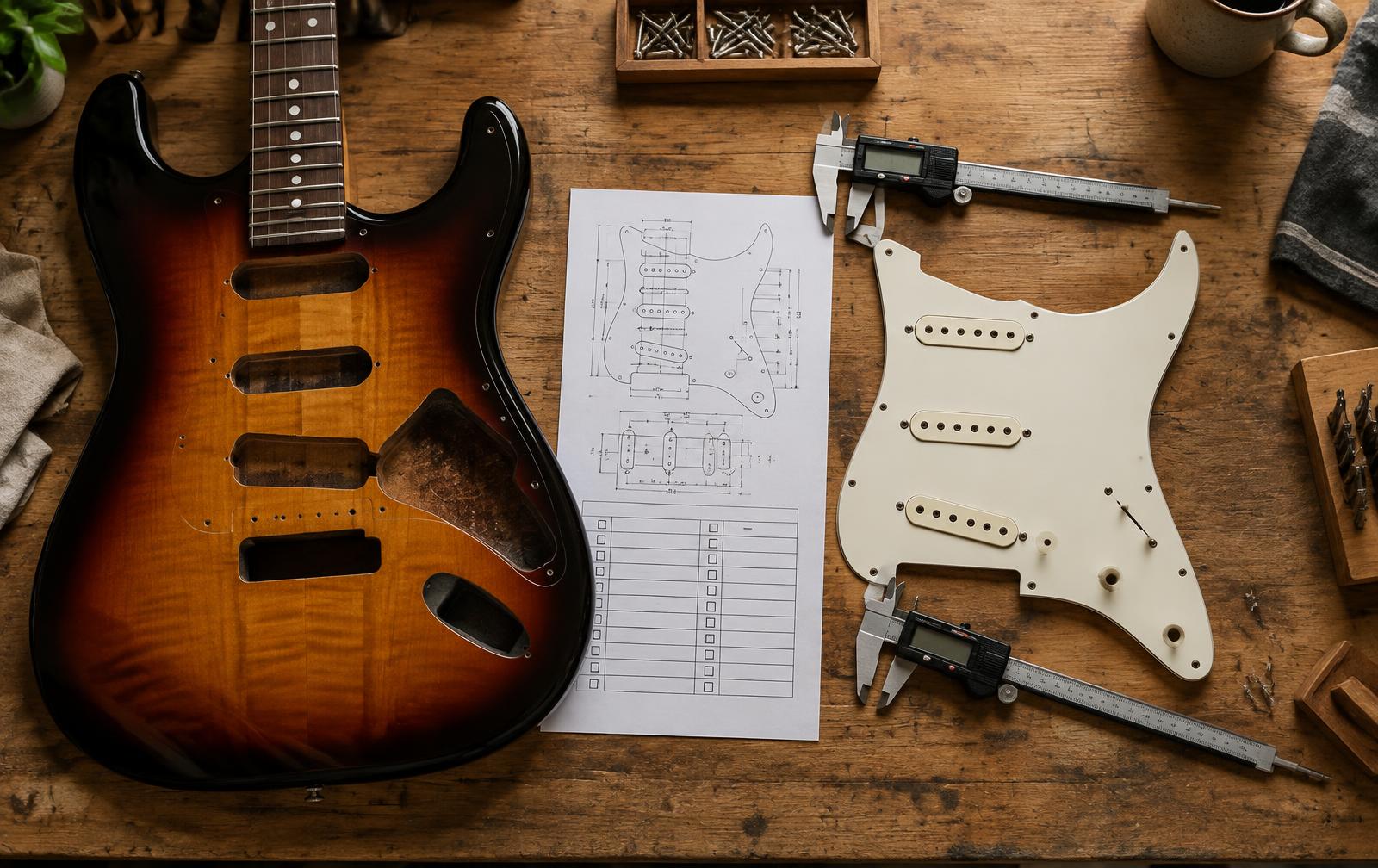
Before you compare colors, upload a photo, or decide between pearloid and tortoise, check the screw-hole pattern on your Stratocaster.
It is not the most exciting part of ordering a pickguard, but it may be the most important. A guard can match the body shape and pickup layout and still fail to fit because one or more mounting holes are in a different position.
“Strat Pickguard” Is Not One Universal Pattern
The Stratocaster has been built for decades in different factories, countries, production eras, and model lines. Modern U.S. and Mexican Fender instruments often use familiar patterns, but vintage layouts, Squier models, import copies, reissues, and modified guitars can differ.
The common descriptions—8-hole, 11-hole, vintage, modern—are helpful starting points. They are not a substitute for comparing the actual hole locations.
The One Check: Compare Every Mounting Hole
Place your current guard flat and count the perimeter screws. Then look at where each hole sits relative to the pickups, switch, knobs, neck pocket, and body edge. Do not only compare the total number.
For an online order, a clear overhead photo is useful. Keep the camera centered above the guard, avoid a wide-angle lens, and include a ruler in the same plane as the part. Angled photos distort distances and can make a wrong pattern appear correct.
If you can print a full-size template, place it directly over the existing pickguard and check every opening and mounting point. Print at 100 percent scale with any “fit to page” setting turned off.
Check These Details at the Same Time
Once the screw pattern is confirmed, verify the rest of the layout:
- Pickup configuration: SSS, HSS, HSH, HH, or another arrangement.
- Bridge clearance: Tremolo and hardtail layouts can require different edges.
- Control positions: Pot and switch openings need to match the electronics.
- Neck pocket: The curve and width should sit cleanly around the heel.
- Material thickness: A thicker guard may change how switches, pots, and screws seat.
These checks are especially important if the guitar has been modified. The logo on the headstock tells you how the guitar began—not necessarily what body, electronics, or previous replacement parts are on it now.
What If the Pattern Does Not Match a Standard Guard?
Do not assume you have to settle for the closest option or drill a new set of holes. The existing pickguard can often be used as the physical reference for a custom replacement.
That approach is useful for partscasters, older imports, discontinued models, and guitars with a history you do not fully know. Once the accurate shape is established, you can choose a traditional material or create a printed design without guessing about fit.
A Better Order of Decisions
Choose fit before finish. Confirm the pattern, hardware layout, and outline first. Then select the color, material, or artwork. If you are using a photo, preview it on the verified pickguard shape so important parts of the image do not land under hardware.
It is a practical sequence that saves time and protects the guitar. Ten minutes spent checking holes can prevent a return, a redrill, or a custom guard that stays in its box.
Ready to create yours? Use the PickGuard World design tool to choose a Strat style and arrange your image, or browse the shop for more custom pickguard options.
Featured in this story
Find your next pickguard
Check before you order
Custom Stratocaster Pickguard
Match the screw-hole pattern, pickup layout, and bridge clearance to your actual Strat before choosing the finish.
Made for your instrument
Design a Strat pickguardFind your next look
Pickguards & Custom Finishes
Browse printed artwork, specialty materials, and made-to-order options after you have confirmed the correct fit.
Cut and finished in our workshop
Shop pickguards